Hoki mai te kahu kiwi o taonga
A taonga is returning home.
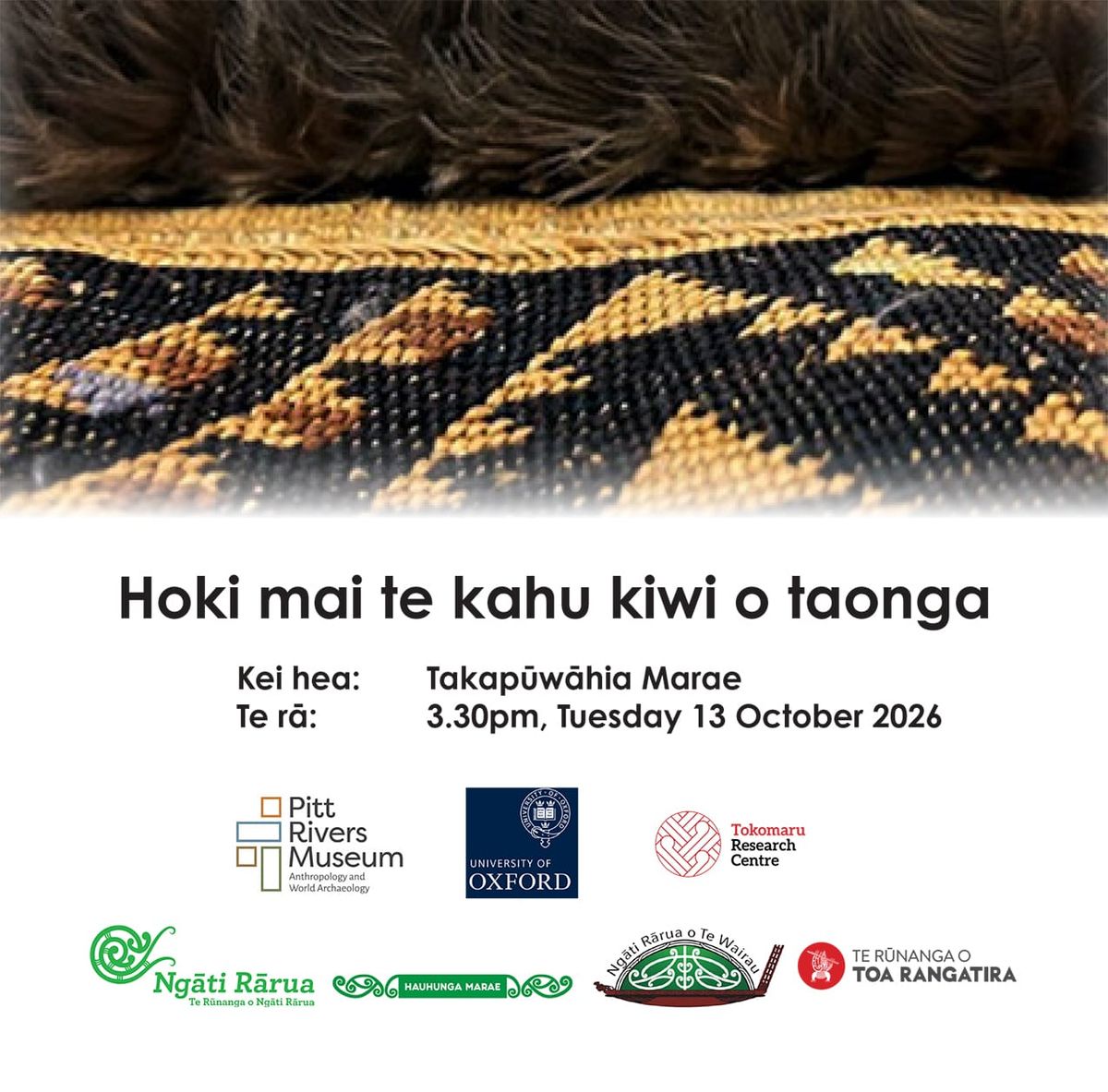
Nau mai, haere mai, hono mai,
Deaccessioning in England
Ngāti Rārua and Ngāti Toa Rangatira whānau living in England are invited to attend the deaccessioning of a Kahu Kiwi at Pitt Rivers Museum on 10 October 2026.
Arrival in Aotearoa
The Kahu Kiwi will then be welcomed back to Aotearoa on 13 October at Takapūwāhia Marae, Porirua, at 3:30pm. Whānau who wish to attend are very welcome.
RSVP by 5 October
It is essential to RSVP by 5 October for catering purposes to Lorraine.Eade@ngatirarua.iwi.nz
Ngāti Rārua whānau:
Please reach out to Lorraine.Eade@ngatirarua.iwi.nz for further details. Depending on the outcome of funding applications there may be some assistance available with ferry costs for Te Tauihu whānau who wish to travel across for the day.
Ngāti Toa Rangatira whānau: Please contact Raewyn Klenner Raewyn@ngatitoa.iwi.nz for more.
About the event
On Saturday 10 October 2026, Pitt Rivers Museum at Oxford University will be deaccessioning a Kahu Kiwi donated by Hapareta Rore Pukekohatu (Ngāti Rārua, Ngāti Toa Rangatira) and his wife Mere Te Hiko (Ngāti Toa Rangatira, Ngāti Rārua, Rangitāne) to Dr George Cleghorn in 1900.
Who was Dr Cleghorn?
Dr Cleghorn was highly respected by Ngāti Rārua and Ngāti Toa Rangatira at Wairau Pa because of his protection and advocacy for Māori living there. Wairau Pa reserve was prone to flooding, which destroyed crops, reduced income for their families, and impacted severely on their health. Prominent illnesses affecting Māori at the Pa included typhoid, scarlet fever, tuberculosis, rheumatism, influenza, measles, and diphtheria. Whānau Māori were expected to attend Picton Hospital, which provided significant barriers, when Wairau Hospital was much closer.
Dr Cleghorn challenged that policy, especially during the typhoid epidemic, and was reprimanded for treating Māori from Wairau Pa by his hospital superiors. The teacher at Wairau Pa Native School also recorded that Dr Cleghorn spent time educating whānau at the Pa at their homes after flooding events, in terms of the importance of taking public health measures. Whānau Māori would often pay for his services in fresh fruit and vegetables, and provide sphagnum moss for bandaging and worked harakeke for sutures.
When Dr Cleghorn left Blenheim, Hapareta Rore Pukekohatu and his wife Mere te Hiko attended the formal farewell in town, and gifted him several items. The Marlborough Express reported:
“One pleasing token of esteem received by Dr Cleghorn came from the Wairau Pah. It was in the form of a fine piece of greenstone, and two specimens of Māori workmanship in flax, of handsome design. This present was handed in by Mr and Mrs A. Rore (the heads of the Pah) on behalf of the Maoris. It was intended for public presentation, but the crowd in the hall was too big and imposing for the native modesty; and it was given in afterwards”.
Research and collaboration
It has taken two years of research and collaboration between Dr Cleghorn descendants, Te Rūnanga o Ngāti Rārua, Te Rūnanga o Toa Rangatira, Ngāti Rārua o Te Wairau Society and the descendants of Hapareta and Mere te Hiko to negotiate its deaccession and return back to the Wairau. We are humbled by the support provided by Tokomaru Research Centre, Kahutoi te Kanawa, Rangi te Kanawa, Pitt Rivers Museum, Te Papa and the Homeward Bound project who have made significant contributions resulting in the Kahu Kiwi return home.
What happens when the Kahu Kiwi arrives home?
On arrival in New Zealand on 13 October, the Kahu Kiwi will be welcomed onto Takapūwāhia Marae, before being temporarily housed at Te Papa until Hauhunga Marae is opened in November 2027 where it will take its place within the new wharenui.