Kia rite Te Tauihu
Get whānau ready for a hot, dry summer with these tips to be prepared for emergencies.

It’s going to be a hot, dry summer. We have seen large scale fires in our region before, and now is the best time to prepare.
The good news is that getting ready for a hot, dry summer starts with one small step. Te Kotahi o Te Tauihu’s Whānau Ready series invites us to take one simple preparedness action each day, with practical ideas to work through together the next three weeks.
We’ll share simple ideas for whānau plans, water and kai, caring for animals, connecting with neighbours and preparing our outdoor spaces. The series also opens up kōrero about fire danger, leaving early and what to think about before returning home. You don’t have to tackle everything at once - choose today’s action and build from there.
Need a hand?
You don’t have to work through your whānau plan on your own. For help getting started or tailoring the plan to your whānau needs, contact whanauready@kotahitehoe.org.nz.
Need a hand? Email Kotahi Te Hoe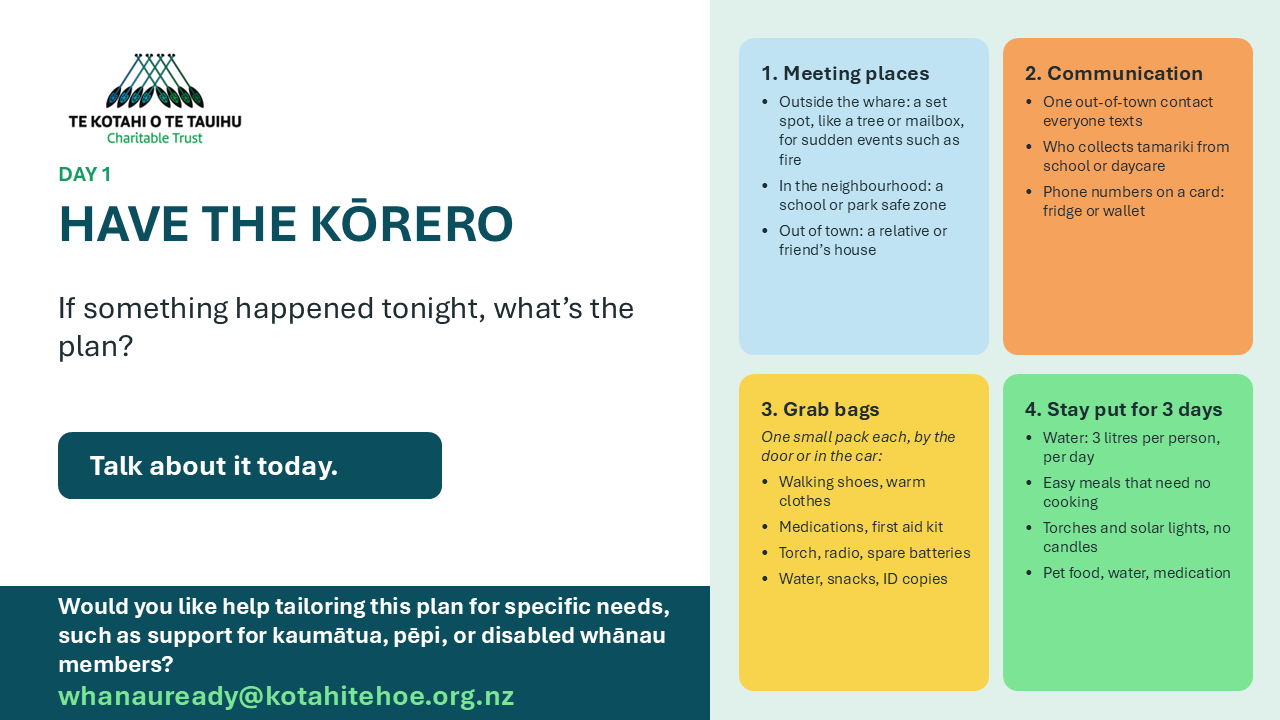
Have the kōrero
If something happened tonight, what would your whānau do? Make time for a kōrero about where you’ll meet, how you’ll stay in touch, who will collect the tamariki and what everyone needs - including kaumātua, pēpi and disabled whānau members.

Water
How’s your emergency water looking? Today’s slide gives us a simple starting point: check what you have stored for everyone in your whare and see what needs topping up.

Food
Could you feed the whānau for three days? Have a look through the cupboards together and choose three items to add to your emergency kai supply - a small step towards being more prepared.
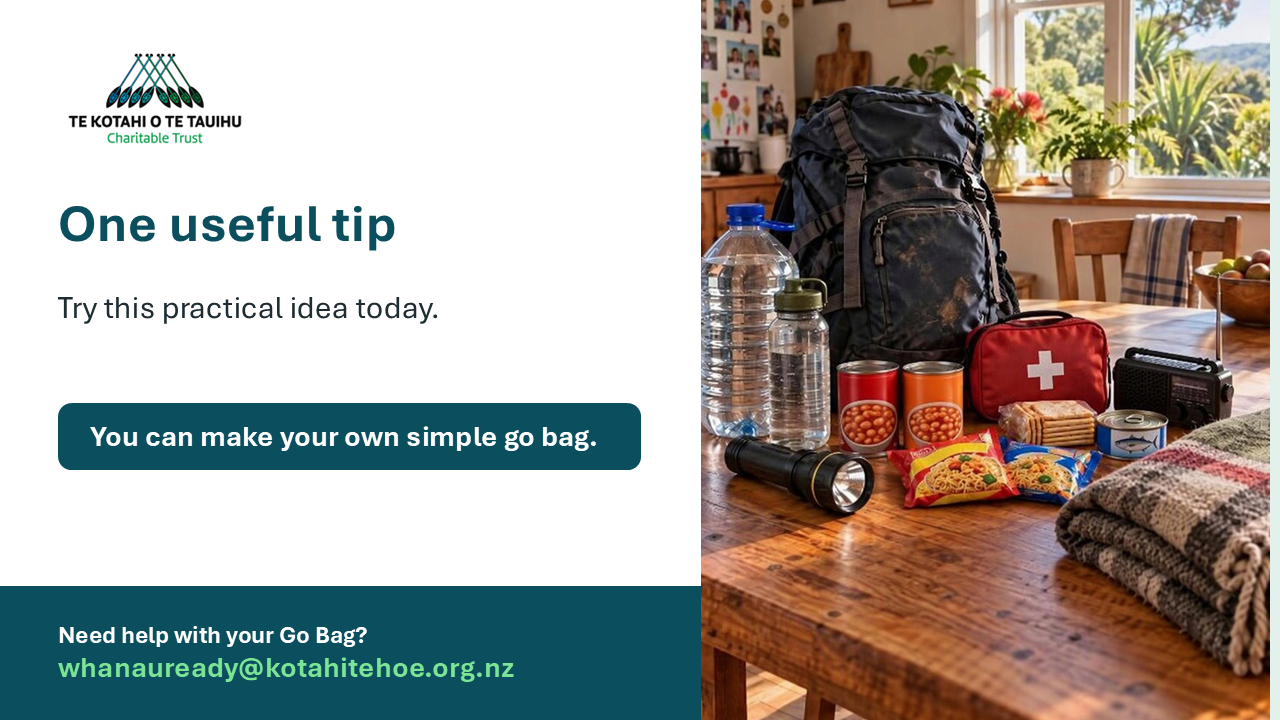
Go-bag tip: One useful tip
A simple go bag is something you can put together a little at a time. Start with a small pack and use the series’ grab-bag ideas to think about the essentials your whānau would need if you had to leave in a hurry.
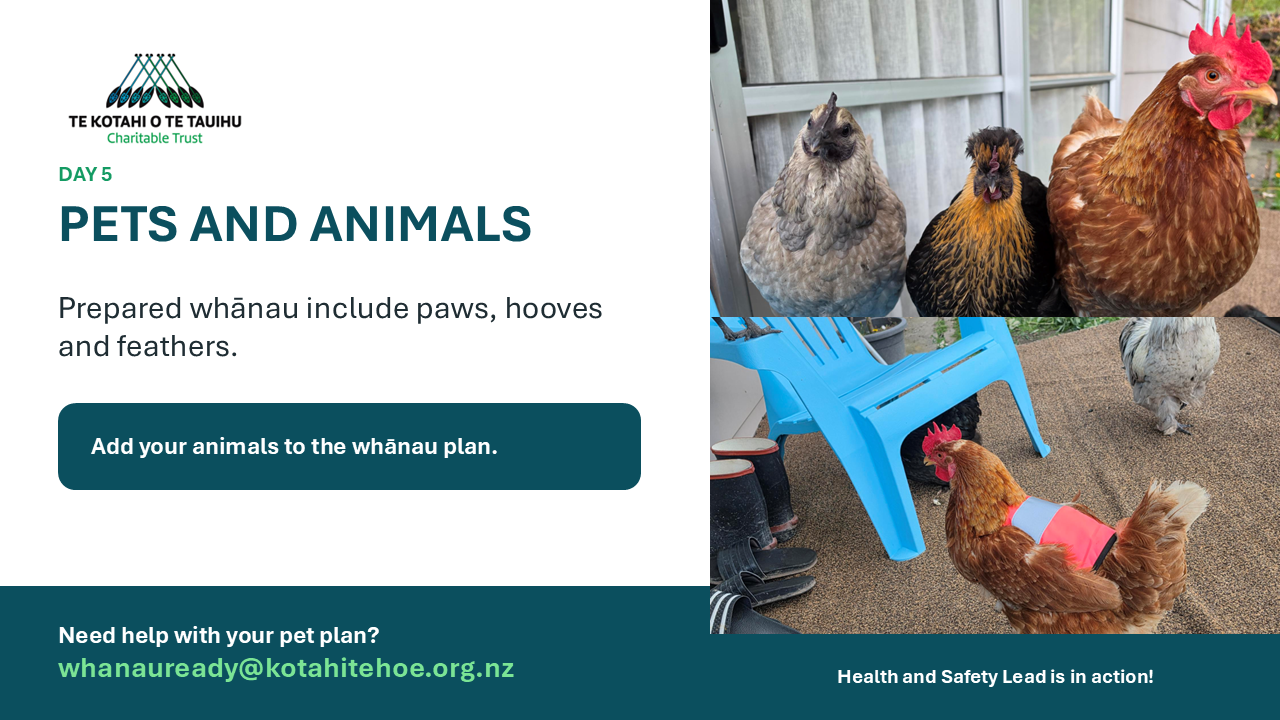
Pets and animals
Paws, hooves and feathers are part of the whānau too. Today, add your animals to the plan and check their food, water and medication needs, so they’re included alongside everyone else.
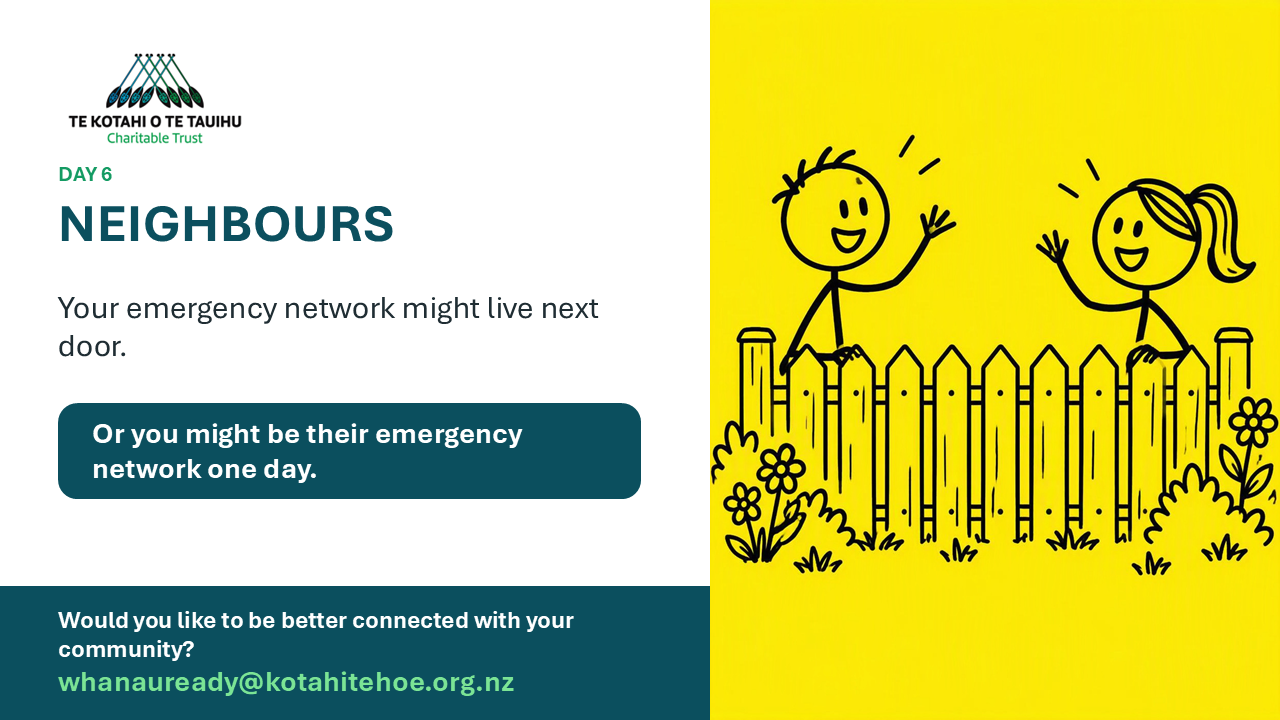
Neighbours
Your emergency network might be right next door — and you might be someone else’s. Take a moment to connect with a neighbour and have a friendly kōrero about how you could support one another.
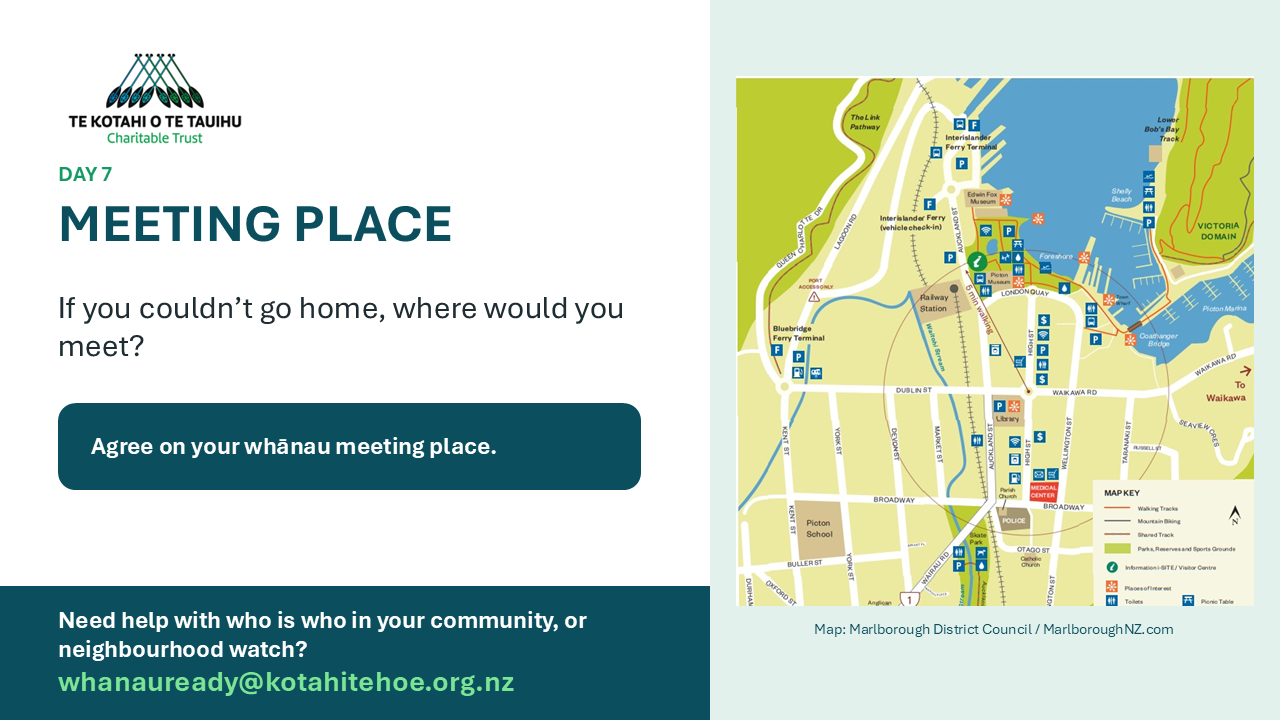
Meeting place
If you couldn’t get home, where would you meet your whānau? Agree on your meeting places together and make sure everyone knows the plan.
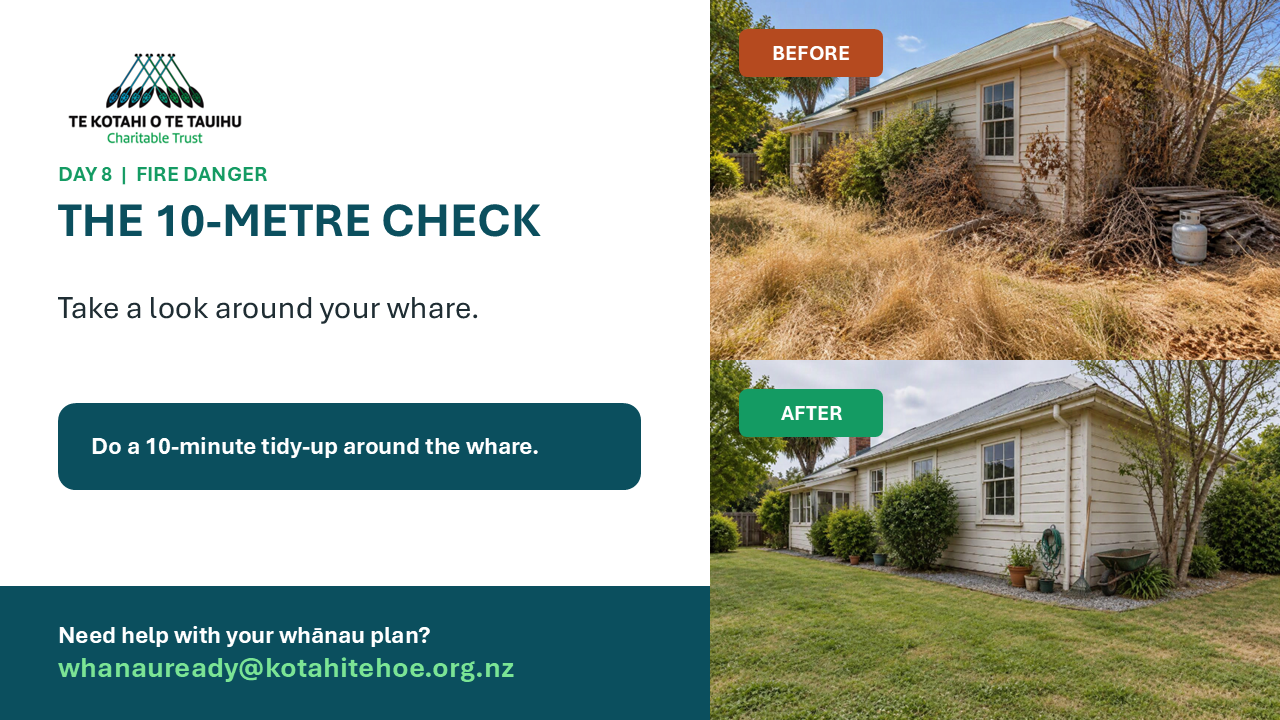
Fire danger: The 10-metre check
Today’s slide invites us to take a fresh look around the whare. Set aside ten minutes for a tidy-up and use the before-and-after images as a prompt for a whānau kōrero about the space around your home.
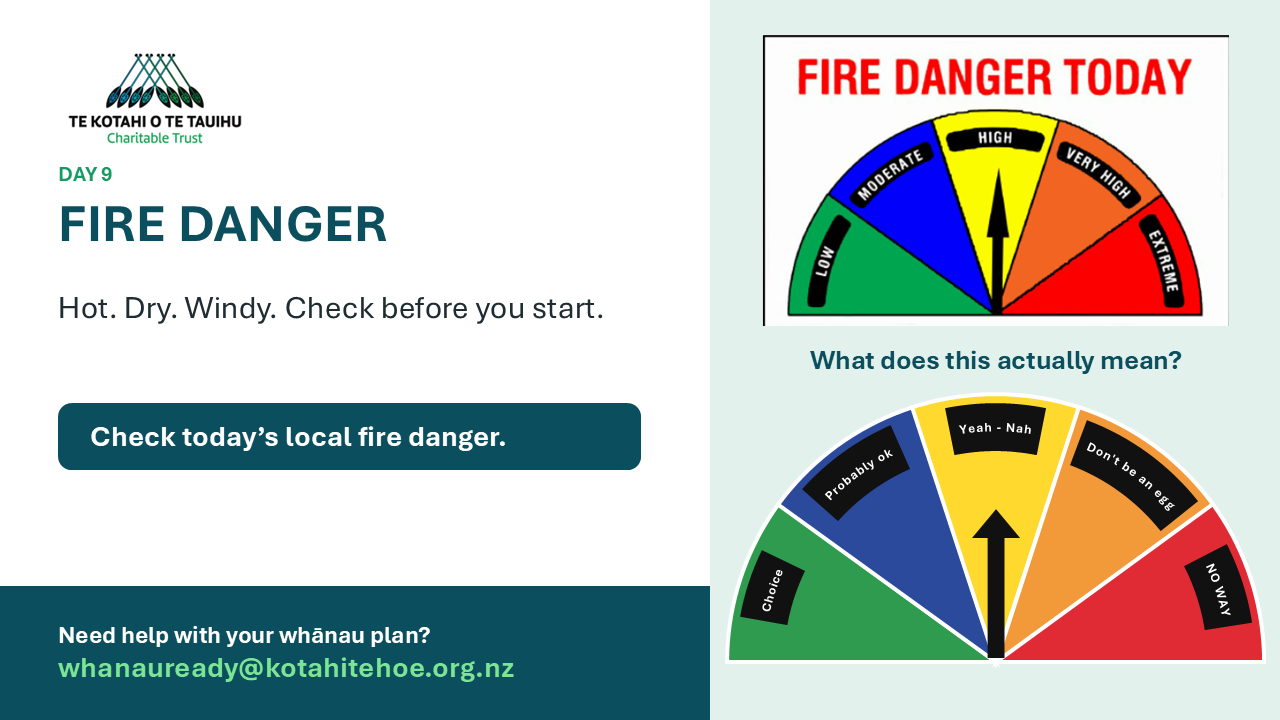
Fire danger
Hot, dry or windy? Make checking the local fire danger part of today’s plan. This slide is a reminder to pause and check before getting started on outdoor activities.
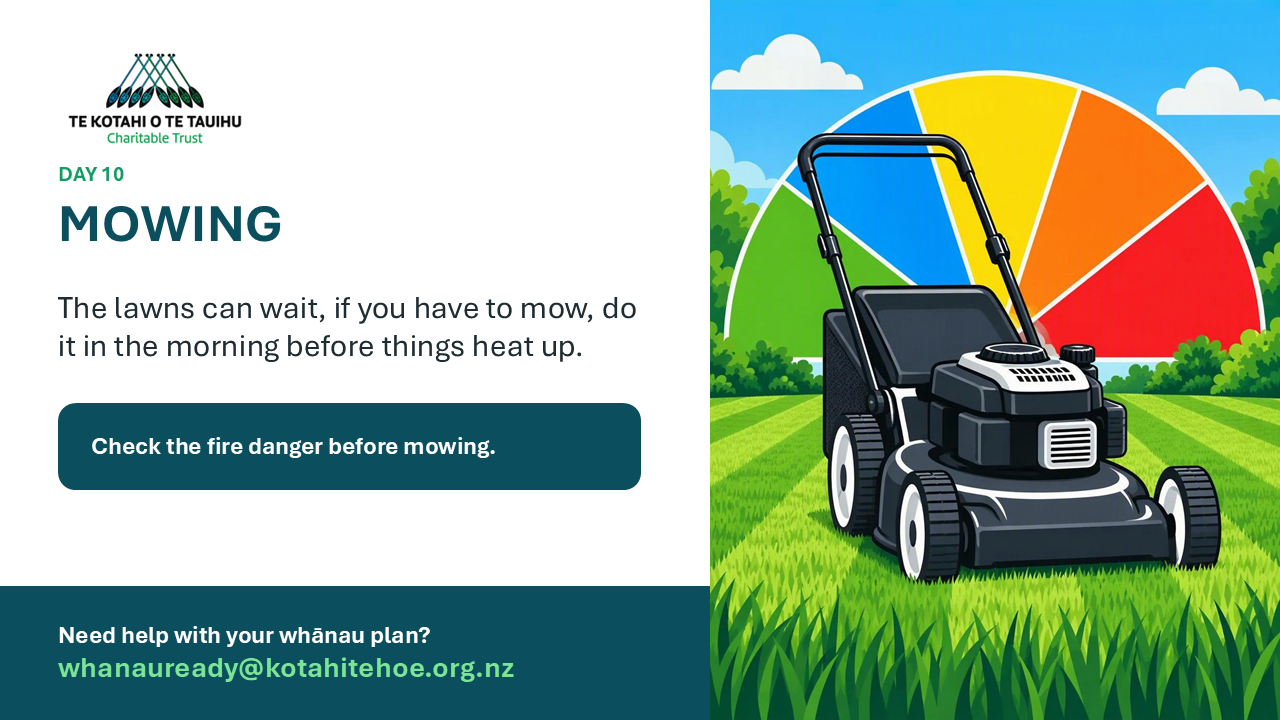
Mowing and outdoor activities
The lawns can wait. Today’s three slides invite us to check fire danger before mowing and think about which outdoor activities can wait. Take a moment to kōrero about the jobs on your whānau’s list before getting started.
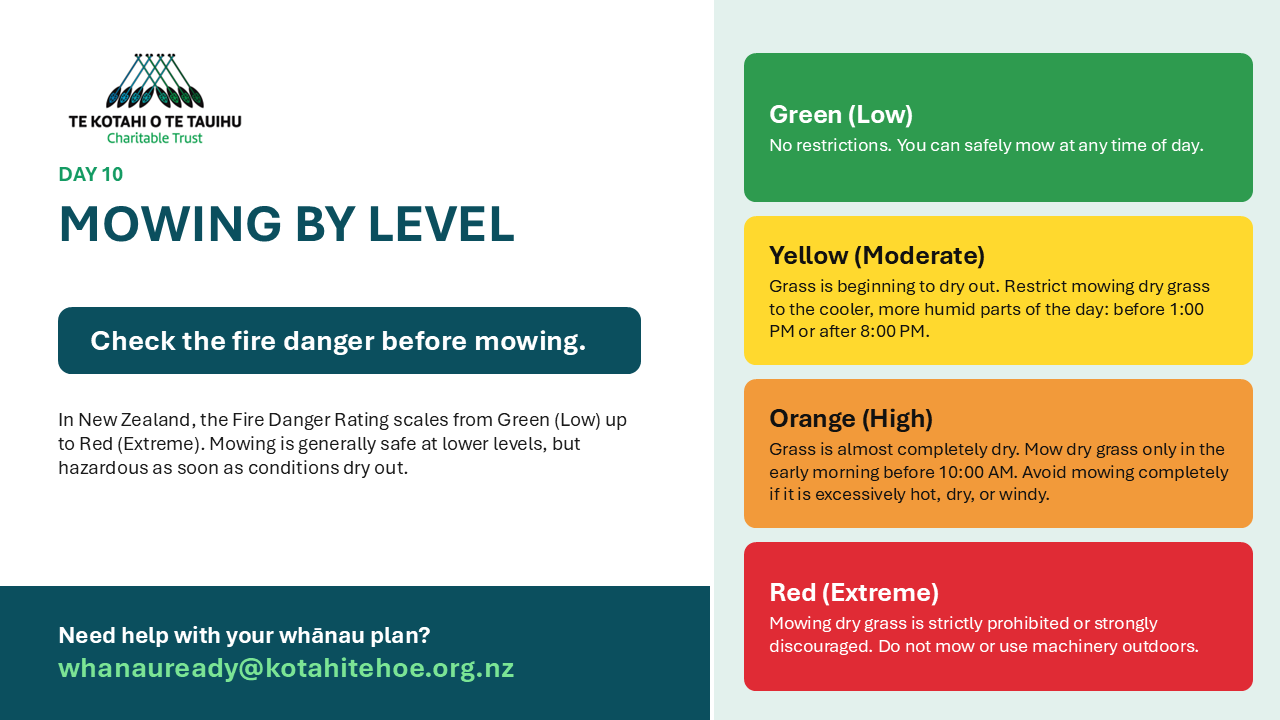
Mowing by level
This slide introduces mowing decisions at different fire-danger levels. Use it as a starting point for checking current local guidance before you get the mower out.
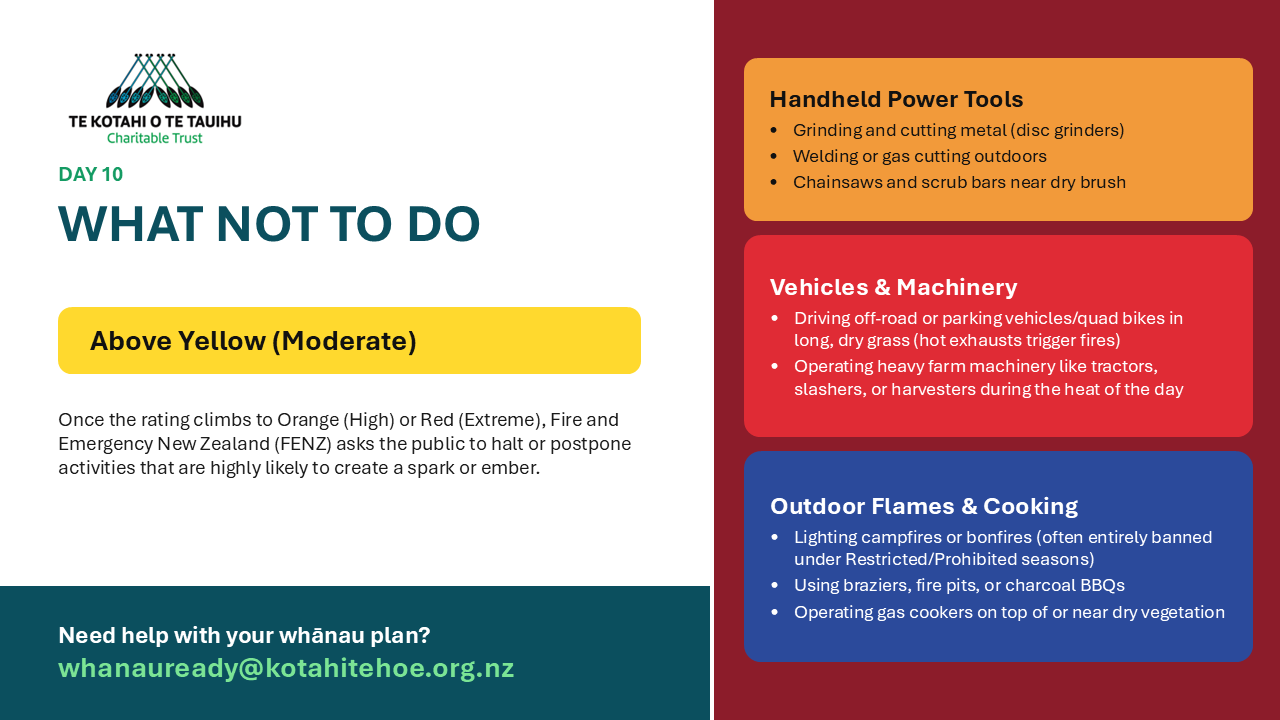
What not to do
From power tools and machinery to outdoor flames and cooking, this slide highlights activities to think carefully about when fire danger rises. Have a look together and identify any jobs or plans you need to reconsider.
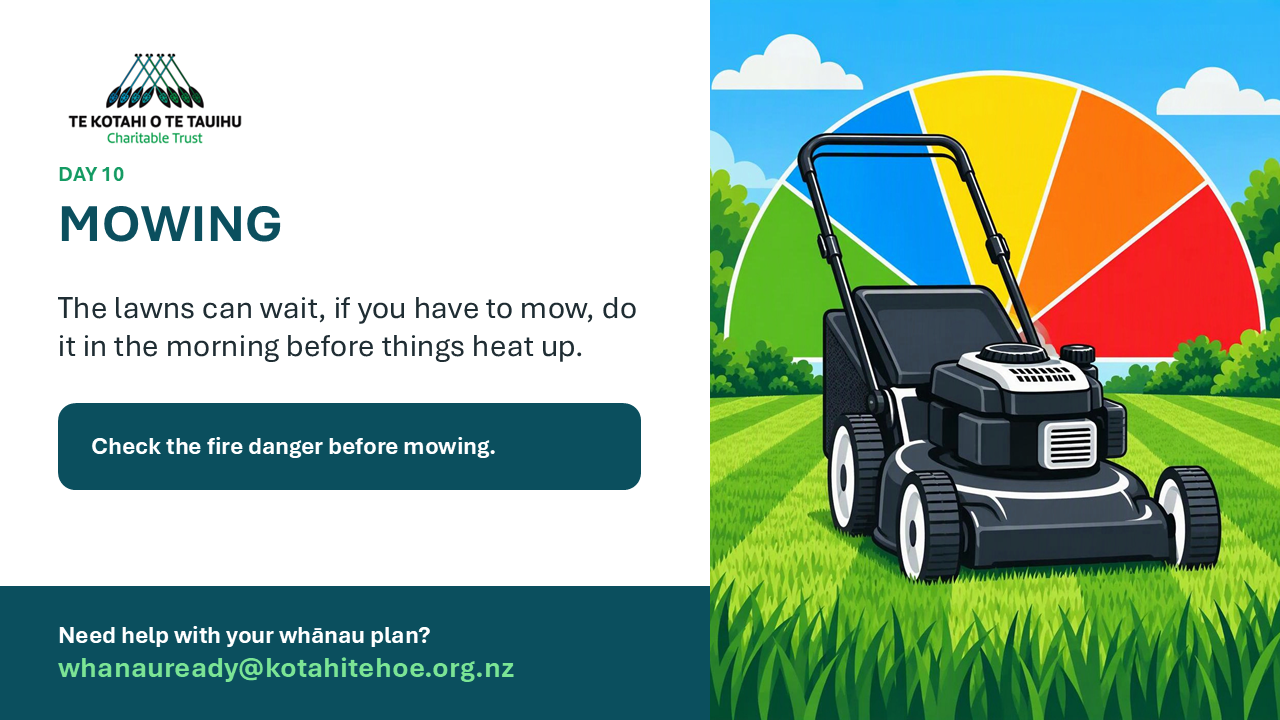
Mowing
A simple reminder for the whānau: the lawns don’t have to come first. Check the fire danger and current local guidance before deciding whether to mow or leave the job for another day.
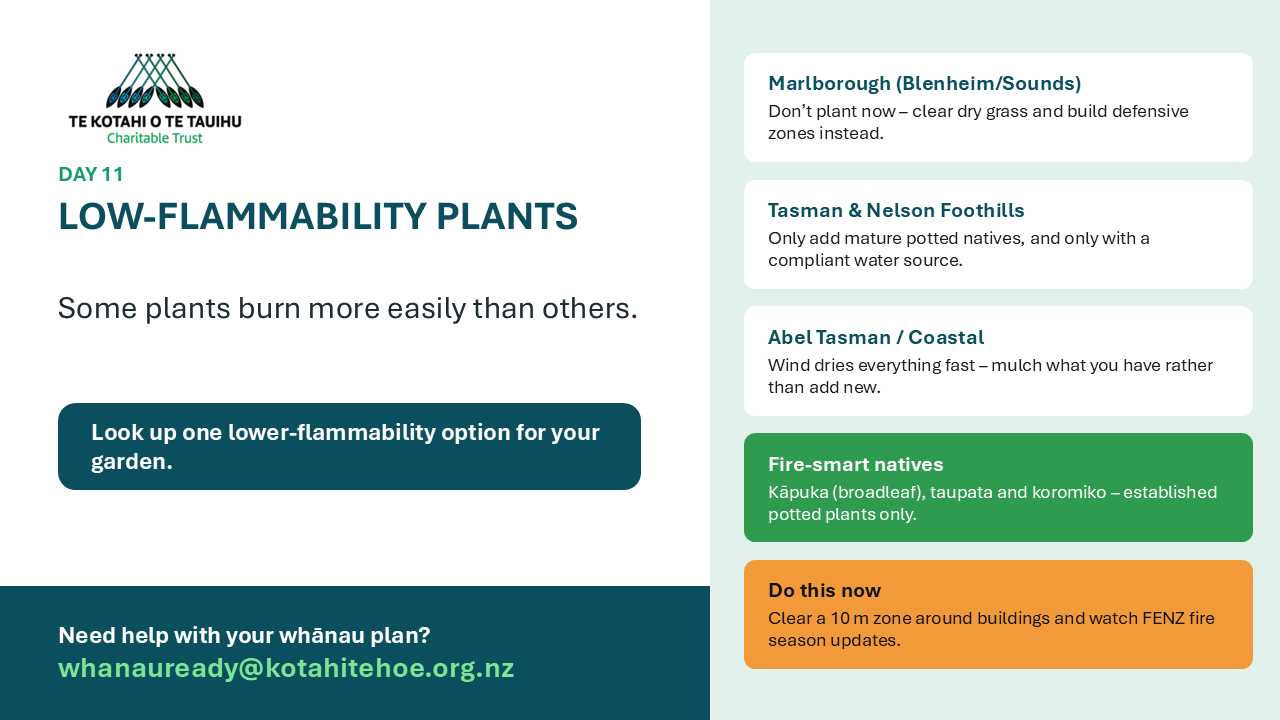
Low-flammability plants
Have a think about the plants around your whare. Today’s small step is to look up one lower-flammability option for your garden and use the slide to start a kōrero about your outdoor space.
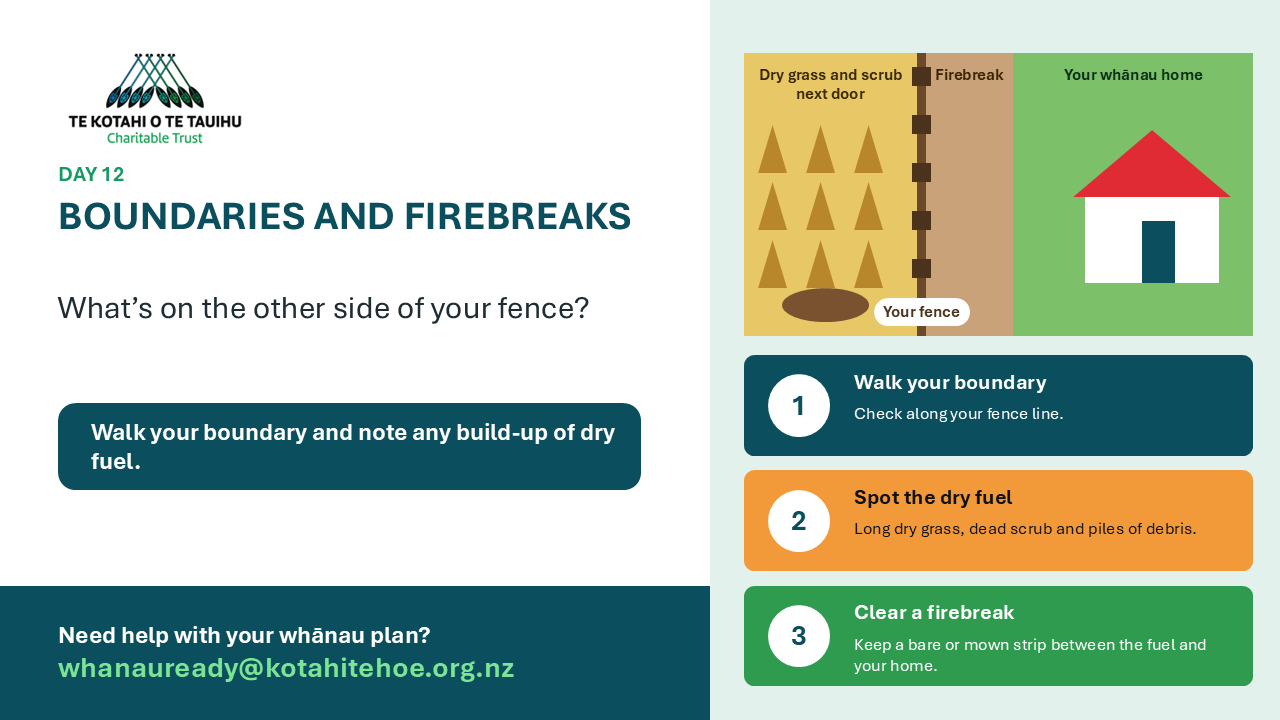
Boundaries and firebreaks
What’s on the other side of your fence? Walk your boundary and note any build-up of dry material. Make this a starting point for a kōrero about what needs attention before summer.
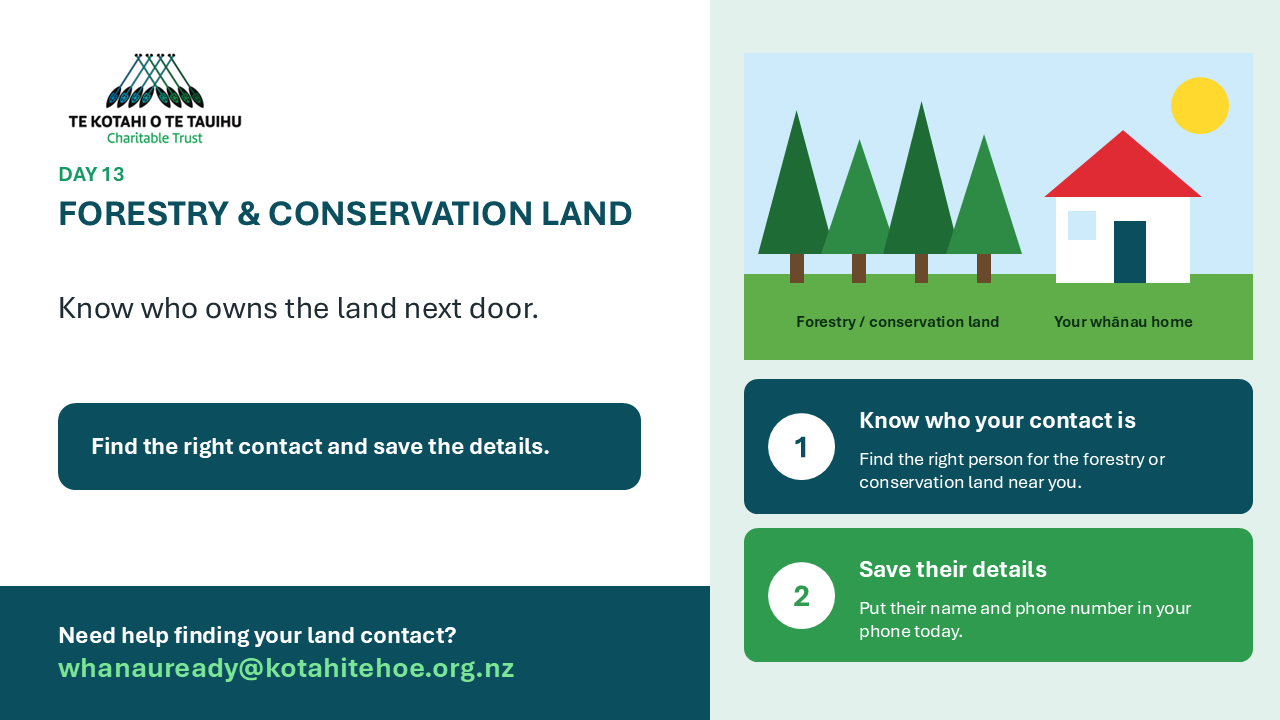
Forestry & conservation land
If your whare is near forestry or conservation land, do you know who to contact? Find the right person and save their name and phone number so the details are easy to find.
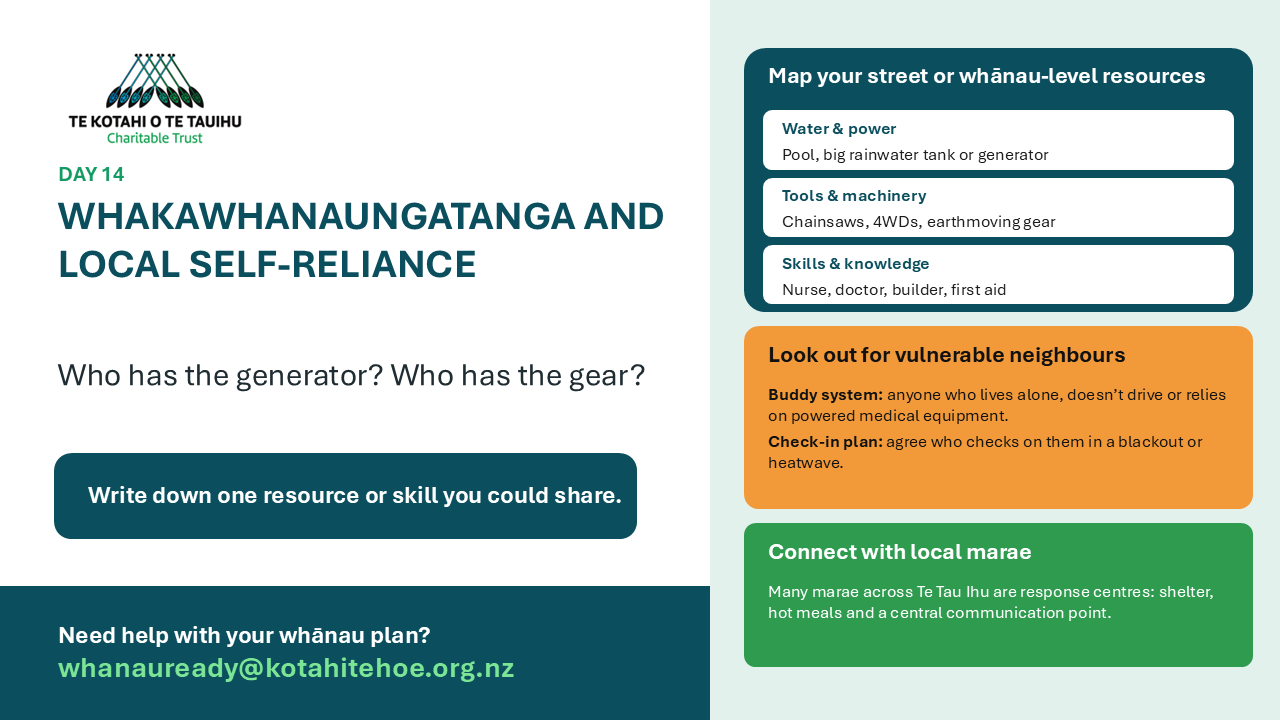
Whakawhanaungatanga and local self-reliance
Who has the gear, and who has a skill they could share? Write down one resource or skill you can offer, agree who might need a check-in during a blackout or heatwave, and connect with your local marae about planning together.
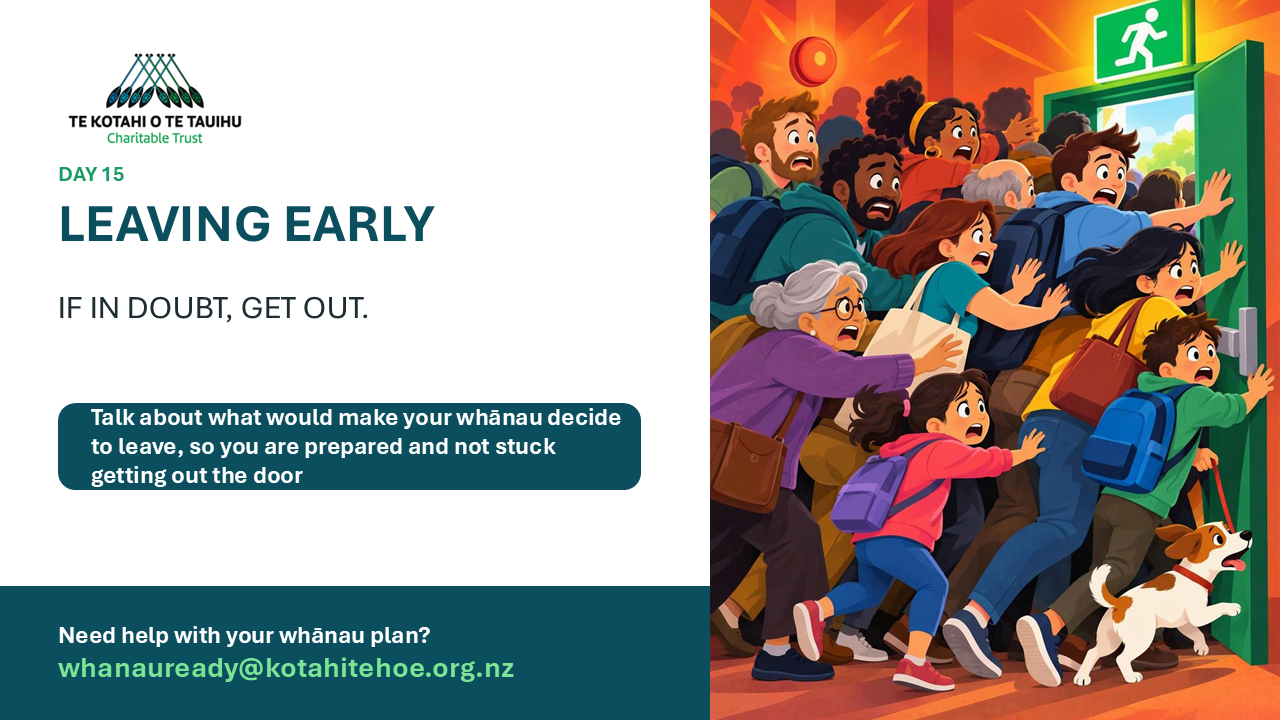
Leaving early
Have the kōrero now about what would make your whānau decide to leave. Today’s slide is about thinking ahead together, so everyone understands the plan before there’s pressure to get out the door.
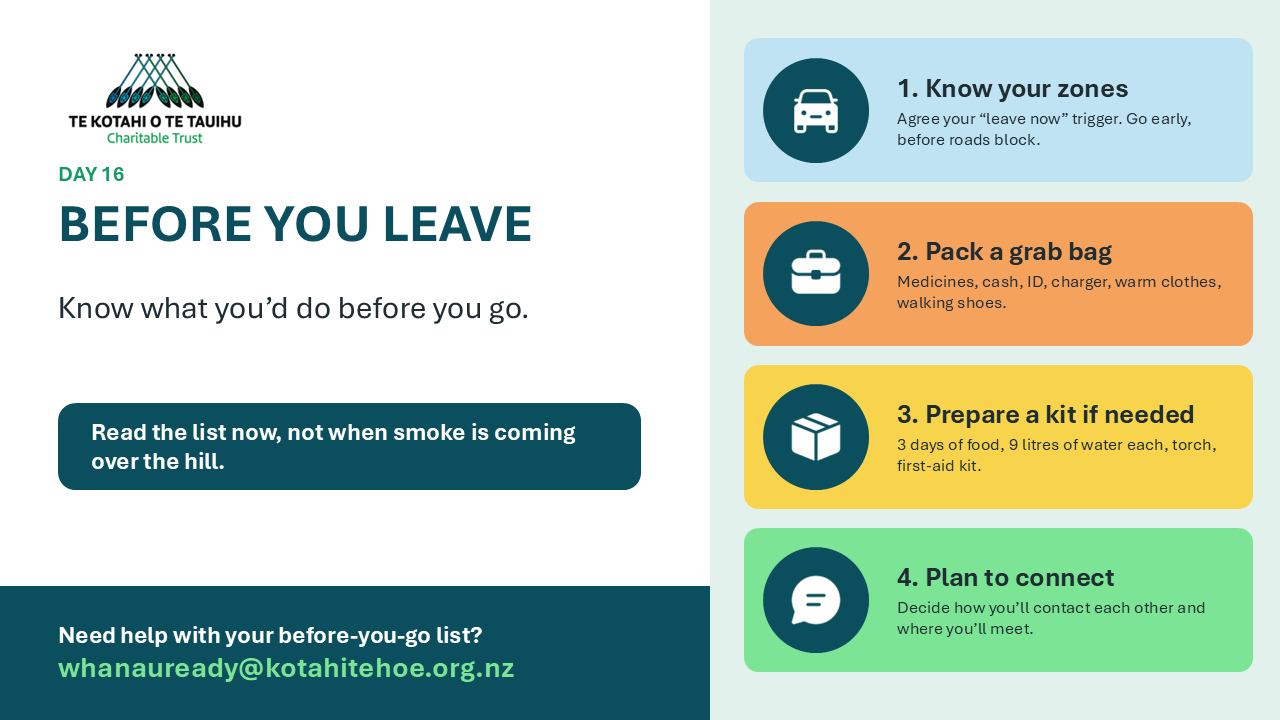
Before you leave
Take a quiet moment to work through your before-you-go list together. Talk about your trigger for leaving, check your grab bag and emergency supplies, and agree how you’ll stay in touch and where you’ll meet.
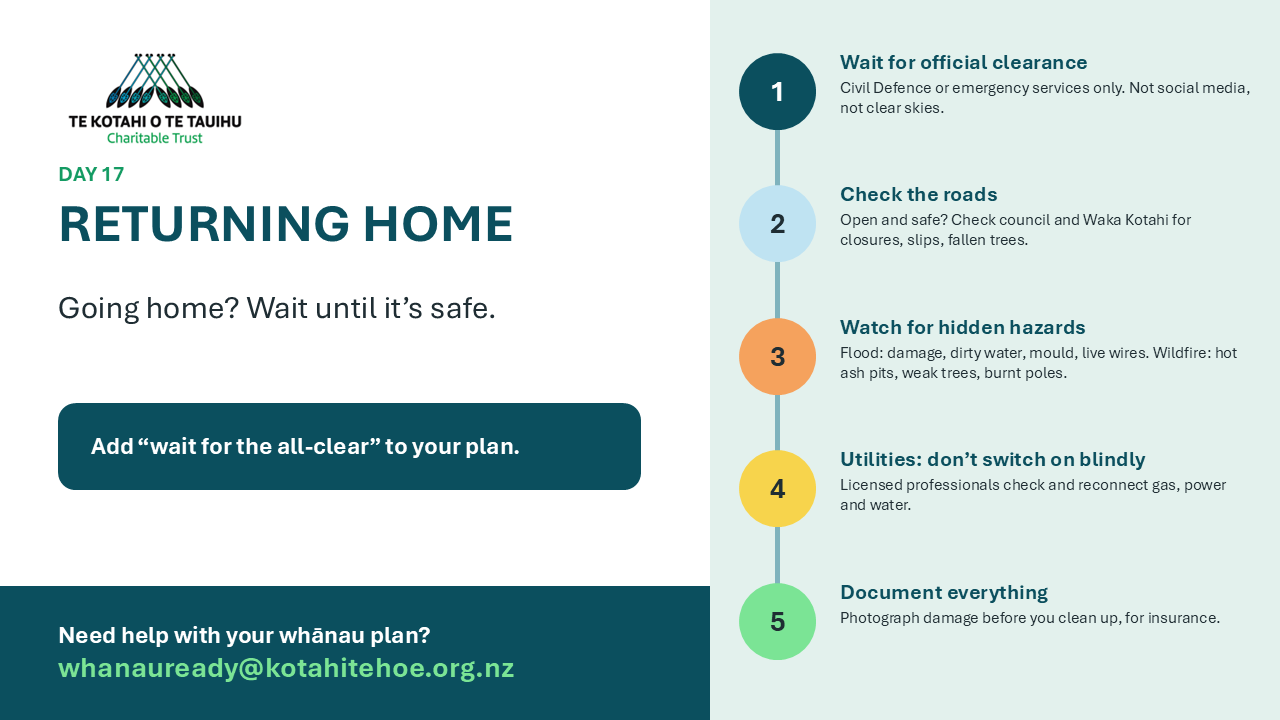
Returning home
We all want to get back to our whare, but today’s message is to wait for the official all-clear. Add that reminder to your whānau plan, along with checking road access, following advice about hazards and utilities, and photographing damage before cleaning up.
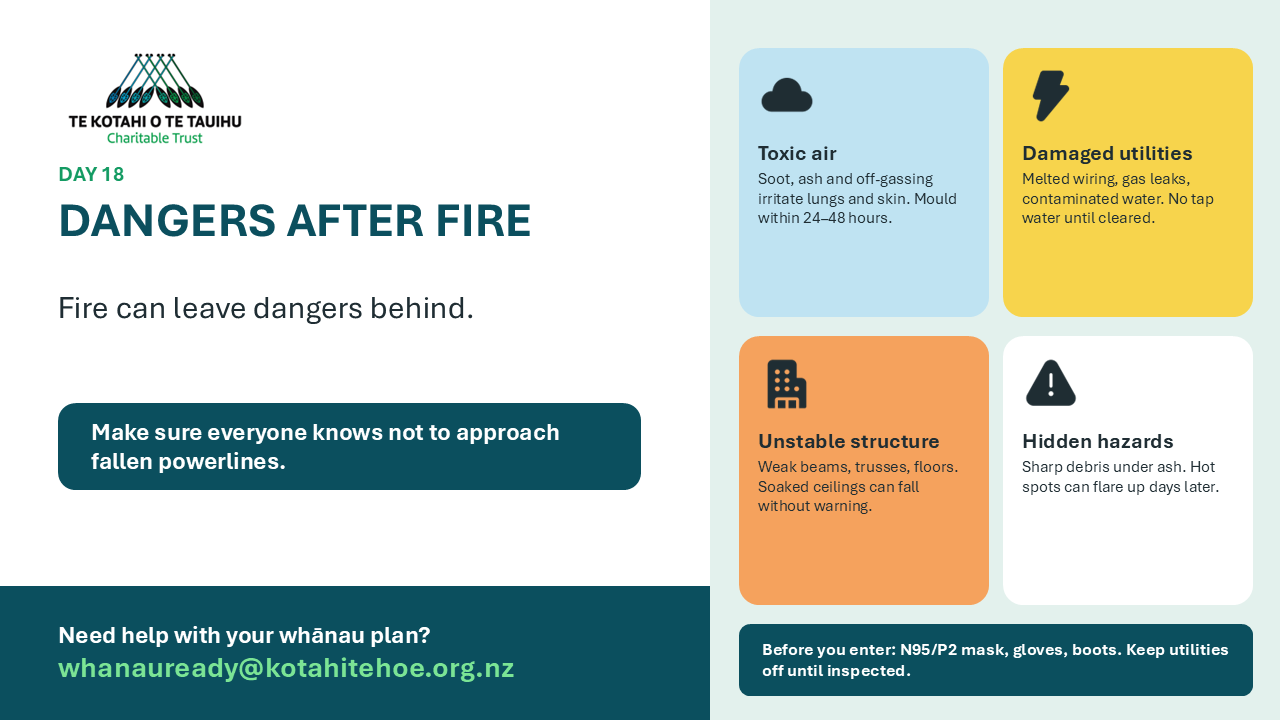
Dangers after fire
This slide reminds us that dangers can remain after a fire, including damaged buildings, utilities and hidden hazards. Have a kōrero with the whānau about staying away from fallen powerlines and waiting for official advice before entering affected places.
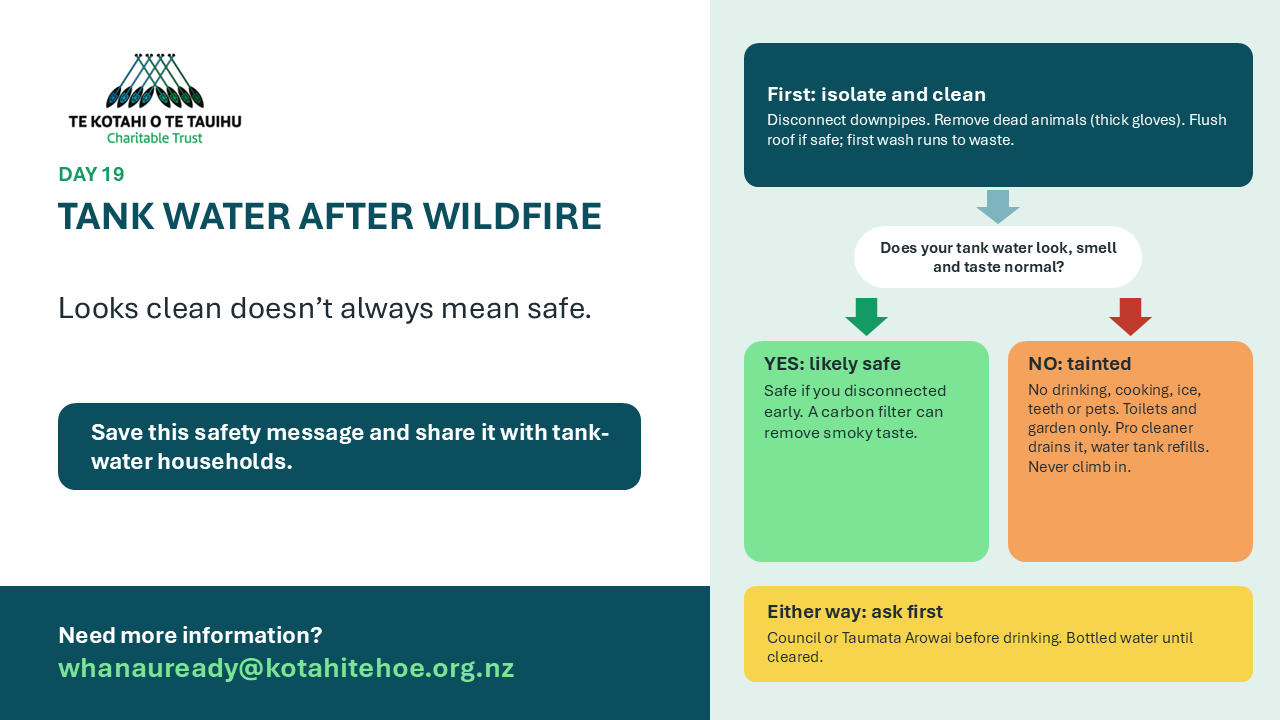
Tank water after wildfire
If your whānau uses tank water, save this reminder: water that looks clean isn’t necessarily safe after a wildfire. The slide directs households to seek advice from the council or Taumata Arowai before drinking it and to use bottled water until it’s cleared.
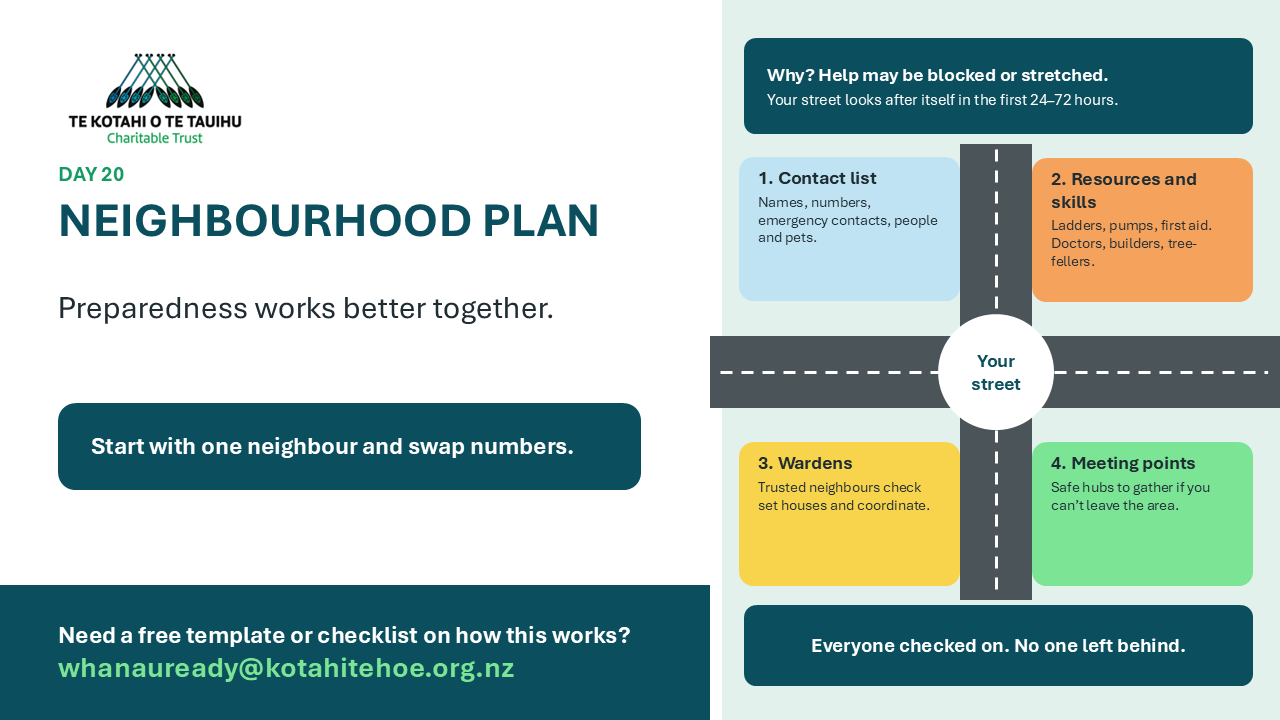
Neighbourhood plan
Start with one neighbour and swap numbers. From there, talk about a shared contact list, useful skills and equipment, who will check on which households and where you could meet - make a plan built together, so no one is overlooked.
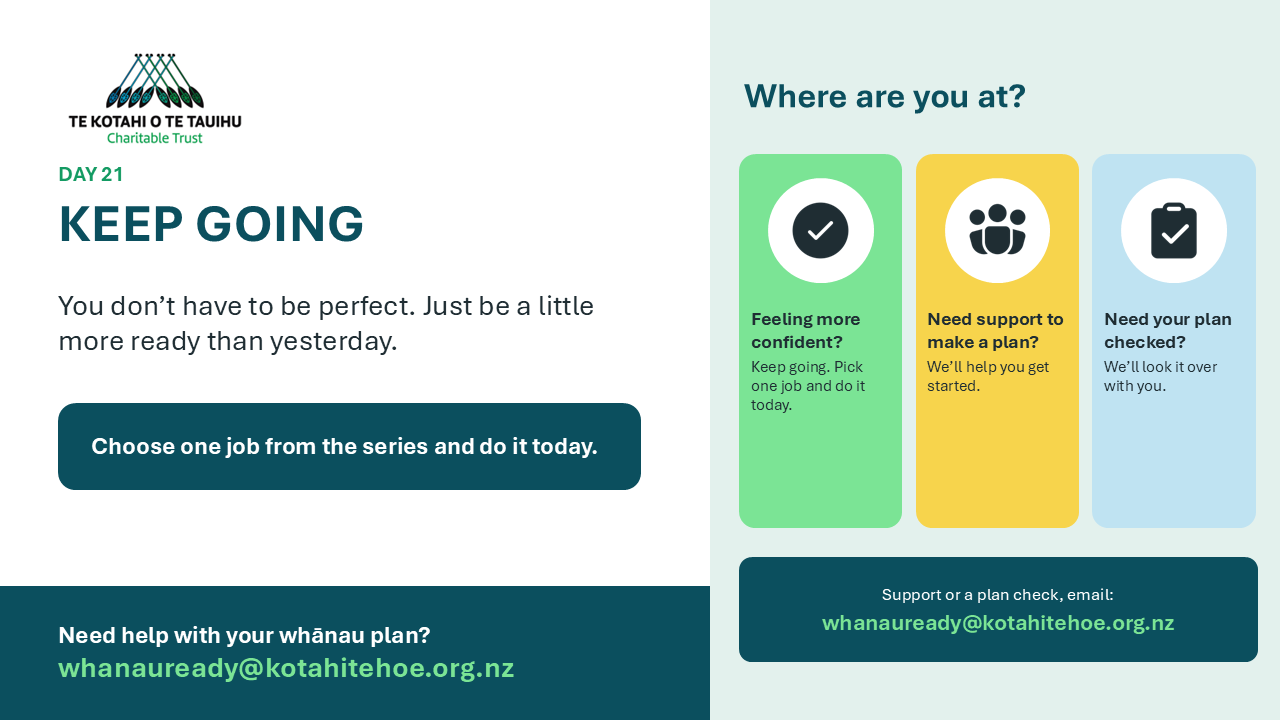
Keep going
You don’t have to be perfect — just a little more ready than yesterday. Choose one job from the series and do it today, or ask for support to get your whānau plan started or checked. Every small step is something to build on.
Need a hand?
You don’t have to work through your whānau plan on your own. For help getting started or tailoring the plan to your whānau needs, contact whanauready@kotahitehoe.org.nz.
Email Kotahi Te Hoe for help