
Parapara aerial predator control set to begin
Predator control is set to begin in the Parapara area of Kahurangi National Park from 10 July.
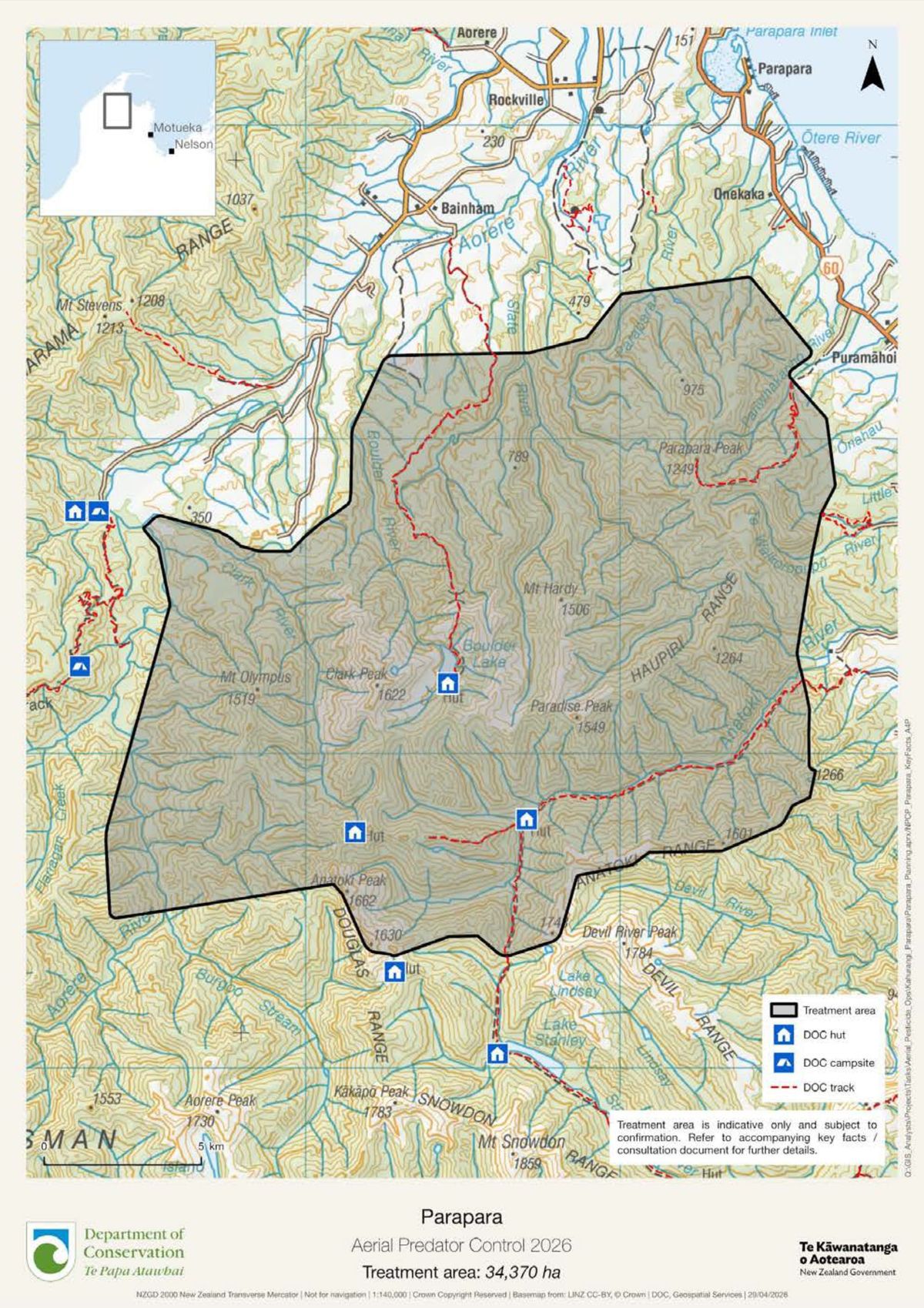
Factsheet
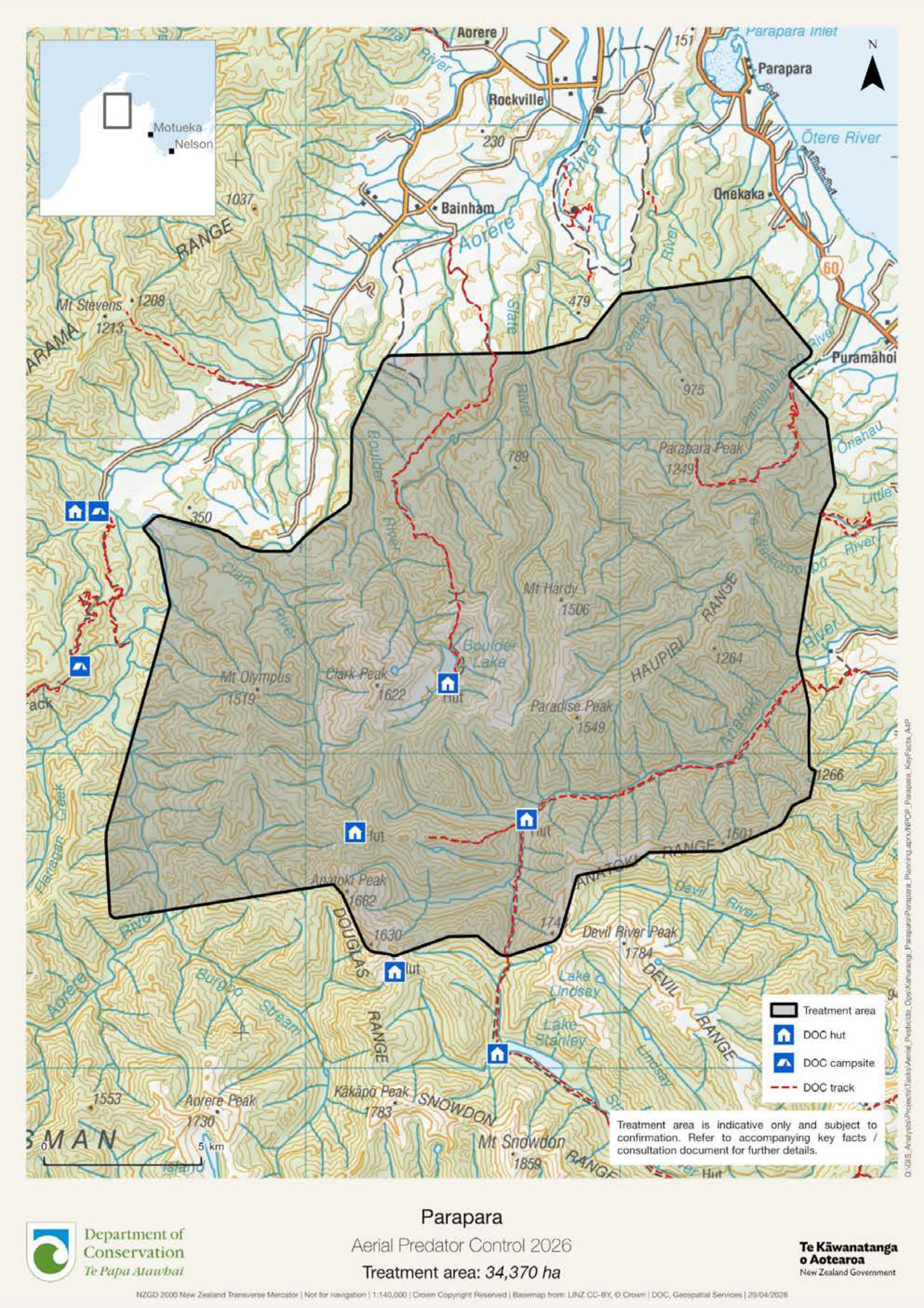
Please refer to the factsheet for further information, including a map of the area.
Planned aerial operation for the control of predators in the Parapara operational block of Kahurangi National Park is scheduled to commence during the first suitable period of weather on/from 10 July 2026.
Methodology
The operation will begin with the aerial application of non-toxic prefeed bait (sandy coloured cereal pellets) and will be followed at least five days afterward by aerial application of toxic bait. Prefeed and toxic baits are about 16mm in diameter, cylindrical shaped and cinnamon lured. Toxic bait contains 0.15% sodium fluoroacetate (1080) and is dyed green.
Managing risk
1080 is poisonous to humans, domestic and game animals. Risks can be eliminated by following these rules:
- DO NOT touch bait
- WATCH children at all times
- DO NOT EAT animals from this area or within the buffer zone outside the treatment boundary. The buffer zone is 2 km for deer and pigs, 200 m for rabbits, and 1 km for hares, tahr, wallabies and possums.
- Poison baits or carcasses are DEADLY to DOGS
Warning signs will be installed at entrances to the operational area prior to toxin application taking place. Follow all precautions stated on signage. When signs are removed, normal activities can resume. If in doubt, check with your local DOC office. Please report suspected vandalism or unauthorised removal of signs.
If you suspect poisoning, please contact:
- Your local doctor or hospital OR The National Poisons Centre: 0800 764 766 (urgent calls) or 03 479 7248 OR dial 111
- Seek veterinary advice for suspected poisoning of domestic animals.
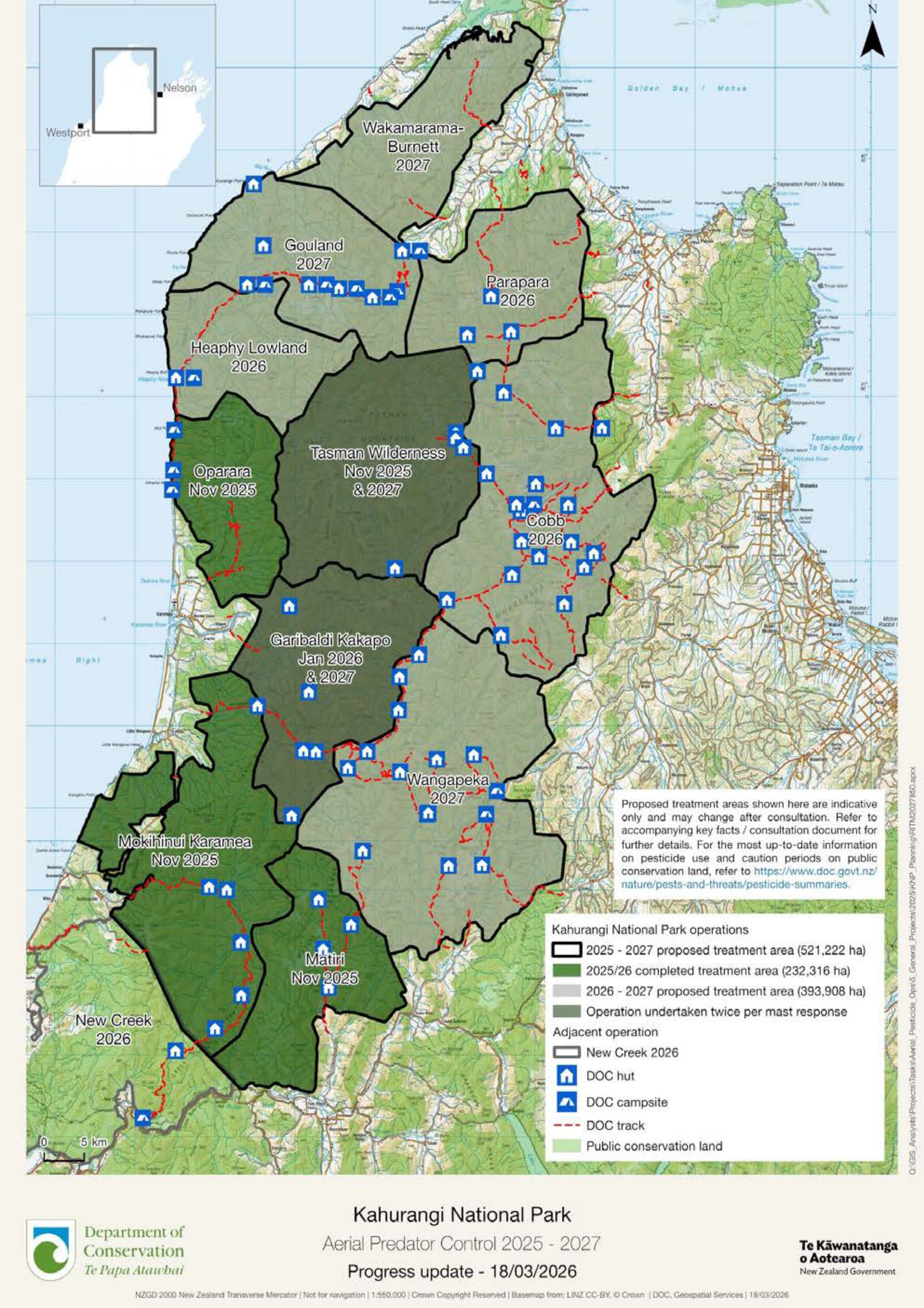
For further information, please contact
Operation Controller: Kahurangi Parapara Operation
Vector Control Services
- Freephone: 0508 141 268
- Email: Info@vcs.net.nz
- Website https://www.wcrc.govt.nz/environment/biosecurity-2/vector-control-services-2