Predator control operations in June
Notification about predator control in the Kahurangi National Park Cobb/Mt Arthur Area
A Department of conservation predator control operation will begin next month as part of DOC’s National Predator Control Programme for Kahurangi National Park.
Timeframe
The operation is planned for the first clear weather window between 1 June and 31 August 2026.
This operation begins with the distribution of non-toxic pre-feed bait pellets to prepare possums and rodents to eat the toxic bait (dyed green) that is applied afterwards. Both baits are about 16 mm in diameter and cylindrical shaped.
The adjacent Parapara block will be treated at a similar time to the Cobb, and notifications will be carried out separately.
Managing Risk
1080 is poisonous to humans, domestic and game animals. In areas where the toxin has been applied, dogs are highly at risk until poisoned carcasses have disintegrated. This takes four-to-eight months or longer.
Risks can be eliminated by following these rules:
- DO NOT touch bait
- WATCH children at all times
- DO NOT EAT animals from this area or within the buffer zone outside the treatment boundary.
The standard buffer zone is 2 km for deer and pigs, 200 m for rabbits, and 1 km for hares, tahr, wallabies and possums.
Poison baits or carcasses are deadly to dogs
Observe these rules whenever you see warning signs about pesticides. These signs indicate pesticide residues may be still present in baits and poisoned carcasses. When signs are removed this means you can resume normal activities in the area. Always report suspected vandalism or unauthorised removal of signs.
If you suspect poisoning, please contact:
- Your local doctor or hospital
- The National Poisons Centre: 0800 764 766( urgent calls) or 03 479 7248 or dial 111
- Seek veterinary advice for suspected poisoning of domestic animals
Map of predator control area
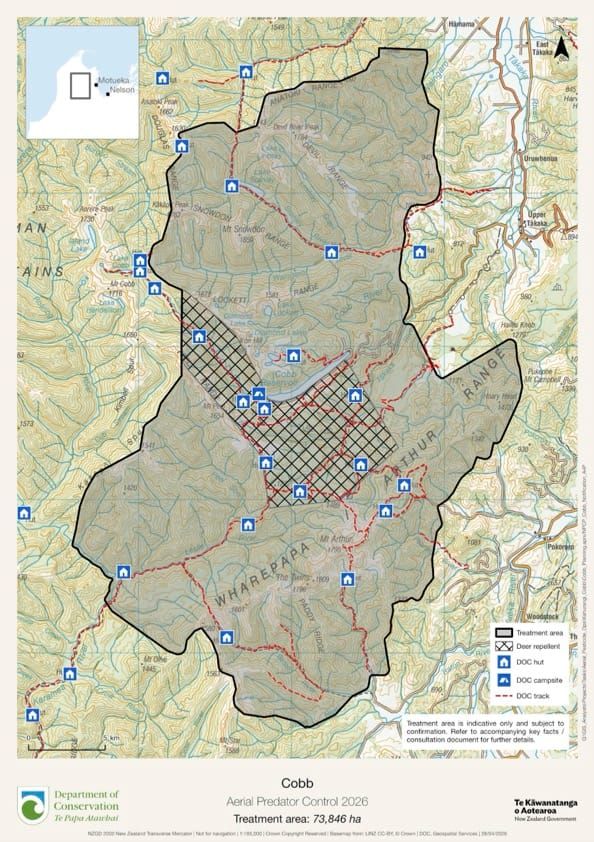
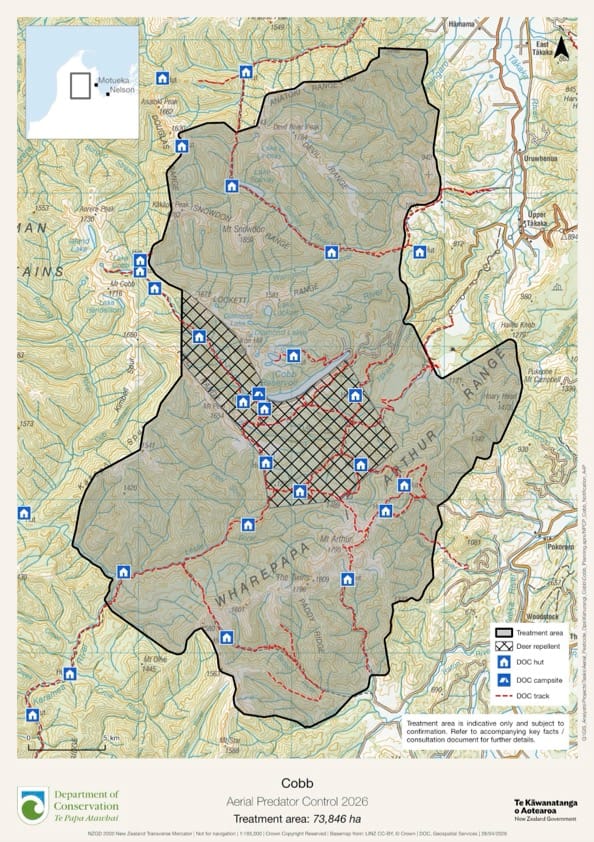
Map 1 shows the confirmed area of 73,846 ha for predator control.
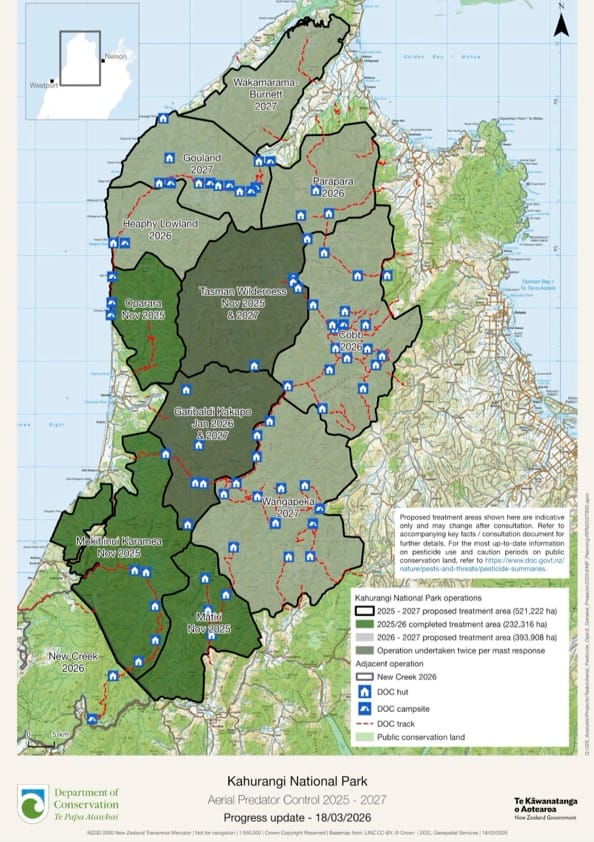
Map 2 shows the schedule of planned and completed operations in Kahurangi National Park.
For more information please contact Sawland Environmental
Email: communications@sawland.co.nz 0800 729 368 OR
Department of Conservation
Cobb Operational Planner
Email: NPCPKahurangi@doc.govt.nz
Including the word “Cobb” in the email subject line.
Visit the DOC website:
- See more information about DOC’s National Predator Control Programme www.doc.govt.nz/our-work/national-predator-control-programme
- See operational updates and detailed maps of predator control on public conservation land
www.doc.govt.nz/nature/pests-and-threats/pesticide-summaries